Expert tips
Heart rhythm disorders: when assessment is useful
Skipped beats are not unusual; everyone has them at some point, and a healthy heart copes with them readily. The causes can be varied, for example bloating, excitement, alcohol, electrolyte imbalance, food intolerances, muscle tension, infections and vwm...
It becomes critical only when heart disease or a rhythm disorder that needs treatment is behind it. Standard assessment rests on a precise history of the symptoms, ECG examinations, ultrasound examinations and laboratory tests.
As a holistically practicing cardiologist and an expert in functional medicine, I go one step further. I look more closely at cellular metabolism, in particular the energy metabolism of the mitochondria and the redox balance. If the heart-muscle cell lacks a healthy membrane voltage, it can become electrically unstable and tend toward rhythm disorders.
I also check whether a burden of spike proteins is still present. These can persist after a coronavirus vaccination or infection and damage the heart and vessels, which in turn triggers rhythm disorders.
When I recommend an assessment
Come for a specialist examination if:
- skipped beats or a racing heart occur newly, more often, or last longer,
- dizziness, shortness of breath, chest tightness, or disturbances of consciousness occur as well,
- the symptoms appear on exertion or without a clear trigger,
- pre-existing conditions, cardiovascular disease, or thyroid disease are already known, or medication is being taken,
- you are unsure what lies behind the sensation.
A single, brief episode of skipped beats without accompanying symptoms is generally harmless. Repeated episodes, accompanying symptoms, or risk factors justify a thorough specialist assessment.
Cardiological basis: what I check first
Basic examinations: history (pre-existing conditions, triggers, sudden onset and end of the rhythm disorder, duration, medication, risk factors, family history), physical examination, 12-lead resting ECG, cardiac ultrasound, standard laboratory tests.
Further cardiological diagnostics
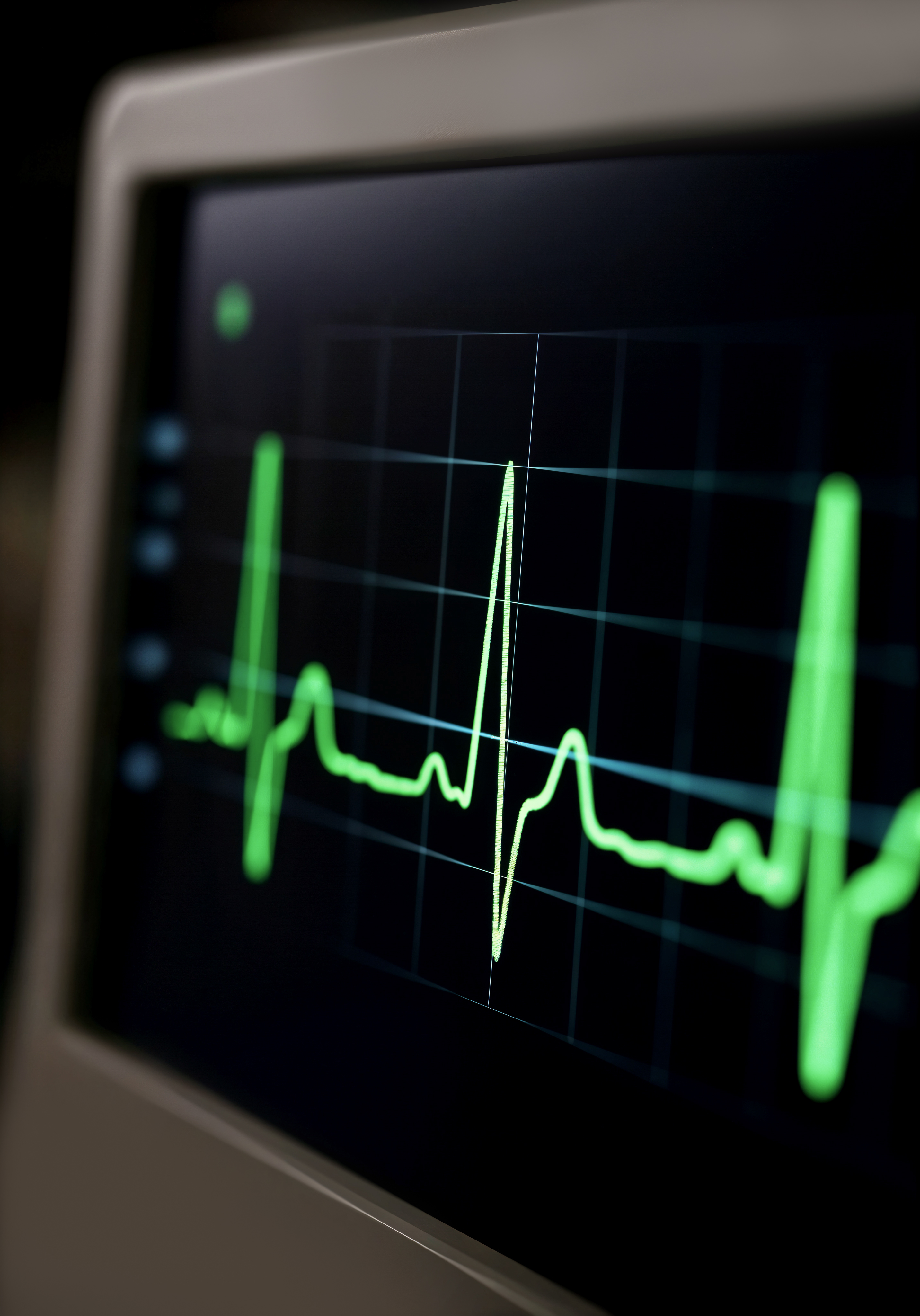
Exercise ECG and cardisiography broaden the diagnostic spectrum and give me information about how the heart responds under exertion and whether there are hidden triggers of rhythm disorders that can only be detected with an ultra-high-resolution ECG.
If we have not found the cause by then, a Holter ECG is the next examination step: the heart rhythm is recorded in everyday life over 24 hours or longer. If you notice symptoms during this time, note the time so we can look at that point in the recording.
One step further: functional medicine
A holistic approach goes further still: I check cellular and energy metabolism. Excitation of the heart-muscle cell depends on ion pumps and the membrane potential. Without a healthy membrane voltage, cells can become electrically unstable and tend toward rhythm disorders. Laboratory tests for impaired energy supply (micronutrients, mitochondrial strain, inflammation), redox regulation, acid-base balance, food intolerances, spike proteins, autoantibodies, the microbiome and gut health, the immune system, and the neuroendocrine system (stress axis, thyroid) complement the examinations so far.
Next step
If you would like a thorough specialist assessment, you are in the right place.
Appointment: via Doctolib or Contact.
Further articles: Expert tips.
The information on this page does not replace individual medical advice, examination or treatment. Whether any measures are appropriate is decided in a personal consultation. Courses differ from person to person.